

In the past, "general average" only appeared once a few years, so it doesn't matter if foreign traders don't understand it. After all, it is a small probability event.
But this year's shipping swim out of the "black swan". First, Evergreen's "Ever Given" (Ever Given), which was stuck in the Suez Canal, declared a general average, while the Lion of the Suez Canal Authority offered US $1 billion in compensation. Then last week, a INTERASIA CATALYST round serving the Southeast Asian India-Pakistan line caught fire and burned 11 containers. It is likely that a general average will also be declared.
So what is general average?
In layman's terms, common sea loss is-the ship has an accident, although your goods are fine, but you also have to share the loss of others.
Cargo owner: Why? The shipping company should bear the responsibility.
Shipping Company: Since ancient times, we have not undertaken it.
general average(Genaral Average,G.A.) is one of the ancient and special legal systems, which originated from the rules of maritime customary law. In the early days, it was common for the captain to take measures such as partial throwing of goods and cutting off masts when the ship encountered natural hazards. The basic principle was that the beneficiaries should share the common average losses suffered by one (or more) parties in proportion to the value of their respective beneficial property.
Here we will not go into detail about the conditions for the establishment of general average and some legal details. * See article 193 of the the People's Republic of China Maritime Code.
Anyway, if the shipping company announced a common sea loss, the goods on somebody else's ship, we have no way.
here we mainly talk about,When the shipping company announces a common sea loss, what will be the important impact on foreign traders and what should be done.
Note: Here we mainly analyze the accident, the goods did not lose, but need to bear the common sea loss together. After all, a ship accident is already a small probability event. As big as a container ship, it happens that your goods are burned/dropped into the sea is a small probability event in a small probability event. If it is really so unlucky, the shipping company will ask the owner for the packing list and invoice at the time of customs declaration, check the value of the goods, and compensate part of the loss according to the proportion. If there is insurance, the insurance company will also compensate.
The main problems faced by cargo owners who have not lost their goods are the following:
01
The first and most direct impact is that the cargo owner's goods are likely to beDelayYes. After all, the shipping company does not casually announce the general average, usually there is a major accident, then in this case, it is basically impossible to expect the goods to arrive in accordance with the ship's schedule. Under the Hague-Visby Rules, the most commonly applicable bill of lading, the carrier is liable only for loss of or damage to the goods, but does not have to compensate for delay in delivery.
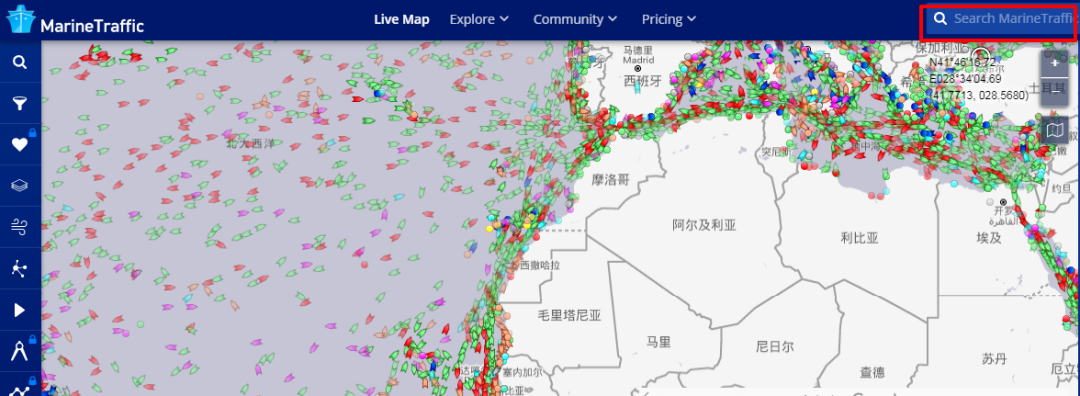
Therefore, informing the buyer of the delay and keeping the real-time status of the ship are the first things the cargo owners have to do.
TIPS: Ship Real-Time Status Inquiry Website: https://www.marinetraffic.com/en/ais/home/centerx:-12.0/centery:25.0/zoom:4
02
The biggest impact on cargo owners who have not lost their goods is that after the shipping company declares a common sea loss,Shippers can't pick up the goods without a guarantee.Explain that when the shipping company announces the general average, it will entrust a reliable professional accounting company to carry out the calculation. For example, the long-term ship accident and the 2018 Maersk Haonan ship fire accident are all invited by the British average loss accounting company Richards Hogg Lindley(RHL). The amount of common sea loss apportionment required by the ship and cargo owners is calculated by the sea loss calculator based on the destination value of the ship and cargo, andThe shipowner has a lien on the goods under his control.However, due to the complicated process and long time required for the calculation, the shipowner can not always hold the cargo owner's goods, at this time the shipowner is required to provide a common sea loss guarantee to the average calculation company, which is equivalent to the shipper's commitment to bear the common sea loss together.
At present, the owner of Changzhi Ship has informed the owner:
“Please refer to the General Average Declaration, Standard Instruction and Average Guarantee issued by the owner and Richards Hogg Lindley. According to article 27 of our bill of lading, the goods shall not be delivered to the recipient unless the shipper submits the necessary general average guarantee (including additional guarantees that we may require) and related documents to the general average and agrees to release the goods.
In order for you to receive the goods smoothly and avoid delay in delivery of the goods, please contact the common sea loss manager as soon as possible and provide the necessary guarantees and documents in accordance with the instructions below."
At this point, the cargo owners who have bought the insurance will have to contact their own insurance company, which will be signed by the cargo insurer."Letter of Guarantee on General Average"(Average Guarantee); The owner of the goods who did not buy insurance needs to provide a cash guarantee (at this time the owner who did not buy insurance went into the pit, and this guarantee did not know that the monkey could get it back).
03
The process of calculating general average is quite lengthy. For example, this long-handed wheel accident, insurance professionals have analyzed, saying that the follow-up must be a long process of pushing the pot to fight a lawsuit. So at this point again shows the importance of shipping to buy insurance.
TIPS: Table of responsibilities between buyers and sellers under various trade terms.
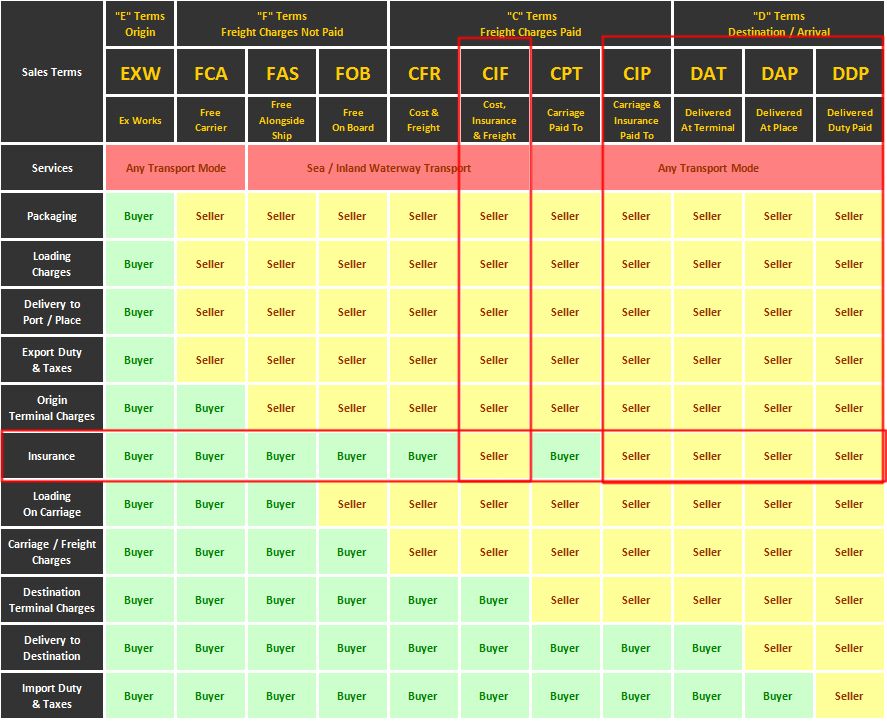
This form can be sent to the buyer and it clearly states under which trade terms the seller or the buyer should buy insurance.Exporters who are FOB can also remind buyers to buy insurance and not to take big losses.
The case of Maersk Haonan
We use the case of the Maersk Honam fire on March 6, 2018. The Haonan accident was the worst shipping accident in recent decades, and even five crew members were killed in the fire. The ship, carrying 7860 containers, departed from Qingdao during the Spring Festival in 2018 and was attached to Ningbo, Shanghai, Xiamen, Shenzhen and other domestic ports. On the way from Singapore to the Suez Canal, a container fire broke out, causing a large wave of cargo owners. Many Chinese foreign traders did not have a good year.
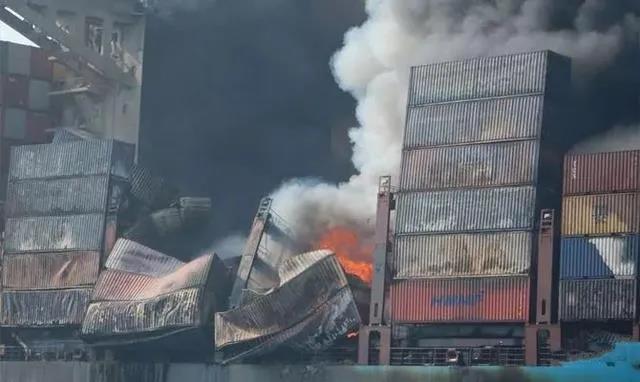
• Four days after the fire, the fire was brought under control; however, it was not until April 18, 2018 (more than a month after the fire) that the fire was basically extinguished, during which the Haonan wheel was burning while being dragged to the anchorage;
• On 24 April, 49 days after the fire, it reached its anchorage outside Jebel Ali, Dubai, but was not yet available, during which time the remaining hot spots in the affected area on board needed to be completely cleared;
-76 days after the fire, the Haonan ship finally arrived at port on 22 May 2018 to begin unloading operations, while cargo owners were notified of the need to bear common sea loss, significant additional operations, transshipment, stockpiling, transportation costs and security deposits. According to the notice sent by MSC to the customer at that time, all customers must pay an additional fee of USD 750/20 'cabinet and USD 1250/40' cabinet, otherwise the shipping company will not be responsible for transporting the goods to the final destination port.
-In May 2018, Hogg Lindley, the general average Richards of the incident, set the rescue margin at 42.5 per cent of the value of the shipment and requested a further 11.5 per cent as a general average deposit. Even if the goods are not in the combustion zone, the owner of the goods can also want to get the goods, and pay a guarantee of 54% CFR value.
According to a report released by the Singapore Transport Safety Investigation Bureau (TSIB) six months after the fire, the severity of the Hao Nam Wheel fire prevented the investigation team from conclusively determining the cause of the fire, but it was most likely caused by a batch of sodium dichloroisocyanurate (SDID), which is found in dry bleach, dishwashing agents, cleaning products, swimming pool disinfectants and sewage treatment products.
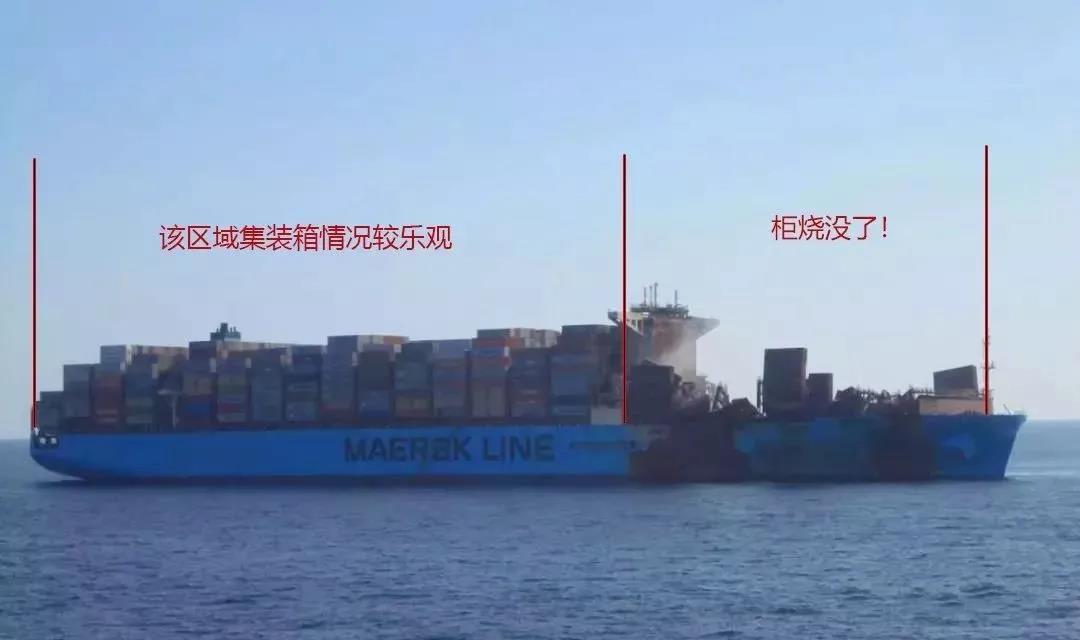
In this incident, the container at the front of the Haonan ship was almost completely destroyed. After that, Maersk cut the ship in half at the UAE shipyard and decided to tow most of the second half of the ship back to the South Korea shipyard for reconstruction. In 2019, nearly 17 months after the fire accident, the restored Haonan, renamed the Maersk Halifax, has been put back into service.
Anyway, there are thousands of shipping routes, and the first one is to buy insurance. Don't want to meet the "black swan", concealing dangerous goods is not allowed!