

Know "nitrogen" and use "nitrogen" well or it will be finished.
Release time:
2020-11-27 09:57
Source:
Elf International Group
Nitrogen fertilizer is one of the largest crop nutrient requirements, is a plant must be a nutrient element, plant life absorption of nitrogen from the beginning of the seedling stage, to gradually increase the trend, to the vegetative growth of the peak period, and then gradually decline until the harvest. Nitrogen fertilizer in the use of volatile, loss, denitrification and other issues. Therefore, it is important to understand the nutritional function of nitrogen fertilizer and use nitrogen fertilizer reasonably to improve the absorption and utilization of nitrogen fertilizer.
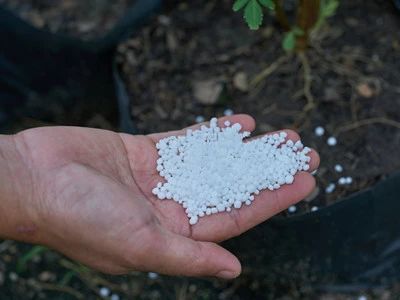
First, the physiological function of nitrogen.
Nitrogen is the constituent element of many important organic compounds in plants, such as protein, nucleic acid, chlorophyll, enzyme, vitamin and so on. Nitrogen plays an important role in the formation of crop yield and quality.
Second, the impact of insufficient supply of crop nitrogen fertilizer.
Once the crop is deficient in nitrogen, it will have a significant inhibitory effect on the upper and lower parts of the crop.
If the crop lacks nitrogen during the vegetative growth period, since the crop growth is centered on roots, stems and leaves at this time, nitrogen deficiency will affect the formation of chlorophyll. The crop not only has slow leaf emergence speed, but also has few and small leaves, and the leaf color will be pale yellow. The root system of nitrogen-deficient crop is white and slender at first than normal, but the root amount is small. At this later stage, the roots stagnated and elongated and appeared brown.
If nitrogen deficiency occurs during flowering and fruit setting, the formation and development of reproductive organs will be affected. At this time, nitrogen deficiency not only causes rare flowers and fruits, but also affects the protein content and quality of the grain. This ultimately affects crop yields.
Third, the above we show that nitrogen fertilizer is indispensable, the same nitrogen supply can not be too much.
When nitrogen is too much, it is easy to promote the formation of a large number of protein and chlorophyll in the plant, so that the vegetative body grows, the leaf area increases, the leaf color is thick and green, and the leaves are covered with each other to shade, which affects ventilation and light transmission. In addition, crops become soft and juicy, lodging resistance is poor, and diseases and insect pests are prone to occur.
It was proved that excessive nitrogen fertilizer was the main factor causing the occurrence of rice planthopper, rice leaf roller and rice sheath blight. In addition, the use of nitrogen fertilizer is not balanced on the occurrence of wheat stripe rust and scab.
If there is too much nitrogen in fruit trees, the branches and leaves will grow excessively, flower bud differentiation cannot be fully carried out, and diseases and insect pests are easy to occur. In addition, the fruit has poor quality, lack of sweetness, poor coloring and late ripening period.
Too much nitrogen application in cotton is easy to cause leaf hypertrophy, long branches and leaves between nodes, poor ventilation and light transmission, not only delayed spitting, but also easy to fall flowers and bells, and ultimately affect the yield.
Excessive nitrogen fertilizer can also easily lead to soil acidification: nitrogen fertilizer will be transformed in the soil, and protons may be generated in this process. Various nitrogen fertilizers are transformed into nitrates. When nitrates are lost, alkaline ions such as calcium and magnesium are taken away, causing soil acidification. In addition, water washing, harvesting and removal of stalks and kernels take away large amounts of calcium and magnesium base ions, causing soil acidification.
In short, excessive application of nitrogen fertilizer not only causes waste and affects yield, but also brings pressure on soil and agricultural environment!
Four, reasonable fertilization is very important
In order to give full play to the important role of nitrogen fertilizer in agricultural production, we must according to the soil conditions and crop growth in different periods and the proportion of nutrient demand, reasonable fertilization position through soil testing and formula fertilization to apply. At the same time, we should also pay attention to the reasonable collocation of phosphorus, potassium, organic fertilizer and medium and trace elements. As far as possible to reduce nitrogen volatilization and loss in the soil, so as to achieve the purpose of efficient fertilization. Let's take a look at the nutrient demand ratio of various crops.
In addition, due to the different soil conditions in China, scientific fertilization should also consider the soil situation combined with soil testing and fertilization is more reasonable. In short, we should remember that fertilization should not only consider nitrogen, phosphorus and potassium, but also balance fertilization. We must adhere to a fertilization principle: the combination of organic and inorganic, to achieve two nutrient balance: nitrogen, phosphorus and potassium to balance, medium and large trace elements to balance nutrients. It is necessary to rationally use three fertilization methods: base fertilizer, top dressing, and foliar fertilizer to cooperate with each other and promote each other.
Nitrogen fertilizer, crop, fertilization, soil, reasonable, nutrient, yield, poly-source petrochemical